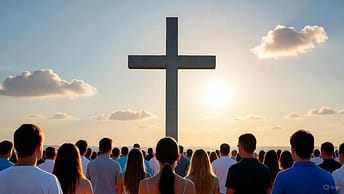


Christian revival represents one of the most dynamic and transformative phenomena in the history of the faith.
At its core, revival describes a period of renewed spiritual vitality, fervor, and commitment among believers, often accompanied by widespread conversions of those outside the faith.
It is both a deeply personal experience and a collective movement that can reshape churches, communities, and even entire nations.
The term itself comes from the Latin “revivere,” meaning “to live again.” This etymology captures the essence of what revival means in a Christian context: a reawakening of dormant faith, a return to spiritual vigor after a season of decline or complacency.
Revival assumes that something once alive has grown cold or lifeless and now requires divine intervention to breathe new life into it.
Throughout Christian history, revival has been understood as primarily a work of God rather than a human achievement.
While believers may pray for revival, organize meetings, or create favorable conditions, the actual outpouring of spiritual renewal is seen as a sovereign act of the Holy Spirit.
This understanding prevents revival from being reduced to mere religious enthusiasm or clever church programming. Instead, it maintains the mysterious, uncontrollable nature of genuine spiritual awakening.
Revival manifests in several distinct ways. On the individual level, Christians experience a profound deepening of their relationship with God. Believers who have been going through the motions of religious observance suddenly find their faith becoming vibrant and real.
Prayer transforms from a duty into a delight. Scripture reading moves from obligation to hunger.
The presence of God shifts from theological concept to tangible reality. Sins that once seemed acceptable or manageable become intolerable, leading to genuine repentance and transformation.
At the corporate level, revival sweeps through churches and communities with remarkable power. Worship services that were once predictable and routine become charged with spiritual intensity.
People arrive early and stay late, reluctant to leave the presence they sense in their gatherings.
Divisions and conflicts that have plagued congregations for years dissolve as pride gives way to humility and reconciliation.
Evangelism becomes natural and urgent rather than forced or programmatic, as believers cannot help but share what they are experiencing.
The effects of revival extend beyond church walls into broader society. Historical revivals have often sparked significant social reforms.
The First Great Awakening in colonial America during the 1730s and 1740s helped create a shared religious identity that transcended colonial boundaries.
The Second Great Awakening in the early nineteenth century fueled the abolitionist movement and numerous other reform efforts.
The Welsh Revival of 1904-1905 reportedly led to dramatic decreases in crime, drunkenness, and public disorder, with bars closing for lack of customers and police having little work to do.
Revival differs from simple church growth or successful evangelistic campaigns. It carries a quality of intensity, spontaneity, and divine presence that marks it as something extraordinary.
While church growth can result from effective strategy and hard work, revival arrives with a sense of God breaking into human affairs in an unusual way.
People often describe revival as times when heaven feels close, when prayer is answered with remarkable frequency, and when conversions happen with surprising ease.
The characteristics of revival typically include several common elements.
Conviction of sin becomes widespread and profound, moving beyond superficial guilt to deep awareness of human rebellion against God.
This conviction leads to genuine repentance, marked by confession, restitution where possible, and radical life change.
Prayer intensifies both in frequency and fervency, often with believers gathering spontaneously for extended times of intercession.
The reading and preaching of Scripture take on new power, with familiar passages seeming to leap off the page with fresh relevance and authority.
Unity among believers flourishes during revival.
Denominational barriers that normally divide Christians become less important as people recognize their common faith and purpose.
Racial, economic, and social distinctions fade in significance as believers experience their fundamental equality before God.
This unity creates a powerful witness to watching communities and often attracts those who have been skeptical of Christianity.
Revival also brings challenges and requires discernment. The intense emotions and dramatic manifestations that sometimes accompany revival can lead to excess or confusion.
Throughout history, genuine revivals have been accompanied by counterfeit movements or extremist responses.
Church leaders must navigate between quenching the Spirit through excessive control and allowing disorder through lack of guidance.
The test of authentic revival lies not in the intensity of the experience but in the lasting fruit it produces: transformed lives, strengthened churches, and communities impacted for good.
The duration and scope of revivals vary considerably. Some last only weeks or months, while others extend for years.
Some remain localized to a single church or town, while others spread across regions or nations.
The Azusa Street Revival in Los Angeles, beginning in 1906, gave birth to the global Pentecostal movement that continues to grow today.
The Jesus Movement of the late 1960s and early 1970s brought thousands of young people into vibrant Christian faith during a time of cultural upheaval.
Christians throughout history have recognized that revival cannot be manufactured but can be sought through earnest prayer, repentance, and expectant faith.
Many revival movements have begun with small groups of believers crying out to God for spiritual renewal.
The invitation remains open in every generation for God to do again what He has done before: to revive His people and awaken those who do not yet know Him, bringing transformation that only divine intervention can accomplish.