The concept of martyrdom stands as one of the most powerful and enduring themes in Christian history.
From the earliest days of the faith through to contemporary times, Christians have faced persecution, torture, and death rather than renounce their beliefs.
But what exactly defines a Christian martyr, and why has this concept remained so significant across two millennia?
At its core, a Christian martyr is someone who chooses death rather than renounce their faith in Jesus Christ.
The word “martyr” itself comes from the Greek word “martys,” which simply means “witness.”
In the Christian context, martyrs are those who bear the ultimate witness to their faith—they testify to the truth of Christianity not merely with words, but with their very lives.
This willingness to die rather than deny Christ has been viewed throughout Christian history as the highest form of devotion and the most profound demonstration of faith.
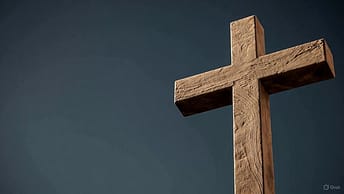
The theology of martyrdom is deeply rooted in the New Testament itself. Jesus Christ’s own death on the cross serves as the archetypal model for Christian martyrdom.
He willingly accepted suffering and death rather than abandon his mission, telling his followers, “Greater love has no one than this: to lay down one’s life for one’s friends.”
The early Christians understood martyrdom as a participation in Christ’s own suffering, a way of following him fully and sharing in his sacrifice.
The first Christian martyr was Stephen, whose death is recorded in the Book of Acts. Around 34 AD, Stephen was stoned to death by Jewish authorities in Jerusalem for his bold proclamation of the gospel and his vision of Jesus standing at the right hand of God.
His final words, echoing Christ’s own, were a prayer for the forgiveness of his killers: “Lord, do not hold this sin against them.” This set the pattern for Christian martyrdom—maintaining faith and love even in the face of brutal violence.
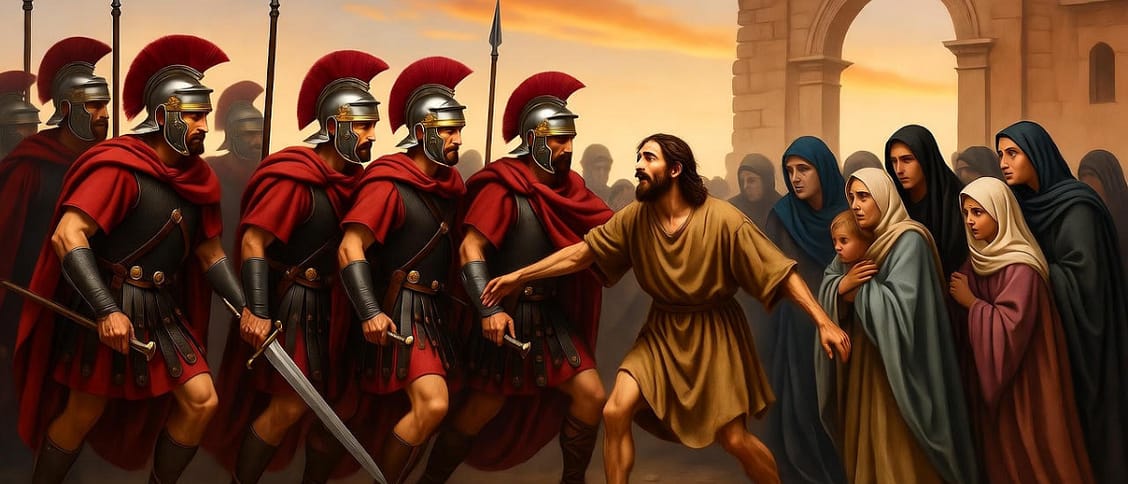
The Roman Empire provided the context for some of the most famous and numerous Christian martyrdoms.
For nearly three centuries, Christians faced sporadic but often severe persecution from Roman authorities who viewed their refusal to worship the emperor and participate in traditional Roman religious practices as treasonous and socially disruptive.
During this period, countless Christians were executed in various horrific ways: thrown to wild beasts in arenas, burned alive, crucified, or beheaded.
Among the most renowned early martyrs is Polycarp, the bishop of Smyrna, who was martyred around 155 AD at the age of 86.
When commanded to curse Christ and worship Caesar, Polycarp responded with words that have echoed through history: “Eighty-six years I have served him, and he has done me no wrong.
How can I blaspheme my King and Savior?” He was burned at the stake, and his courage inspired generations of Christians to remain steadfast in persecution.
The early church father Ignatius of Antioch, martyred around 108 AD, wrote letters to various Christian communities as he was being transported to Rome for execution.
These letters reveal a Christian who actively embraced martyrdom, seeing it as the ultimate way to unite himself with Christ.
He wrote, “I am God’s wheat, and I am being ground by the teeth of wild beasts to make a pure loaf for Christ.”
This attitude—viewing martyrdom not as tragedy but as triumph—became characteristic of early Christian martyrdom.
The persecution under Emperor Diocletian, beginning in 303 AD, represented perhaps the most systematic and severe attempt to eradicate Christianity.
Thousands of Christians were killed, including Sebastian, a Roman soldier who was shot with arrows and left for dead, and Agnes, a young girl of twelve or thirteen who refused to marry a pagan suitor and instead consecrated herself to Christ.
She was executed for her faith, becoming a symbol of purity and devotion.
The medieval period saw a different character of martyrdom.
While persecution from Roman authorities had ended with Constantine’s embrace of Christianity in the fourth century, Christians now faced martyrdom through conflicts with other religions and political powers.
Thomas Becket, the Archbishop of Canterbury, was murdered in his own cathedral in 1170 by knights loyal to King Henry II, after Becket refused to submit church authority to royal control. His death shocked medieval Europe and he was quickly canonized as a martyr.
The Protestant Reformation brought a new wave of martyrdom as religious conflicts intensified across Europe.
Both Catholics and Protestants suffered martyrdom depending on which authority held power in a given region.
William Tyndale, who translated the Bible into English, was strangled and burned at the stake in 1536 for heresy.
His final words were reportedly, “Lord, open the King of England’s eyes.” Within a few years, his prayer was answered, and English Bibles became widely available.
During the same period, countless Anabaptists were martyred by both Catholic and Protestant authorities for their beliefs in adult baptism and separation of church and state.
Their stories are preserved in “The Martyrs Mirror,” a massive collection of martyr accounts that continues to inspire pacifist Christian communities today.
The missionary expansion of Christianity into Asia, Africa, and the Americas also produced many martyrs. In Japan, the “Twenty-Six Martyrs of Japan” were crucified in Nagasaki in 1597 during a period of intense persecution.
In Uganda, a group of young Christian converts, both Catholic and Anglican, were burned alive in 1886 on the orders of King Mwanga II for refusing to renounce their faith and resist his sexual advances.
The twentieth century witnessed martyrdom on a scale unprecedented in Christian history. Communist regimes in the Soviet Union, China, and Eastern Europe systematically persecuted Christians, killing millions.
In the Soviet Union alone, countless priests, monks, nuns, and lay believers were executed or died in labor camps.
Maximilian Kolbe, a Polish Franciscan friar, volunteered to die in place of a stranger in Auschwitz concentration camp in 1941, offering his life in an act of Christian love and sacrifice.
Dietrich Bonhoeffer, a German Lutheran pastor and theologian, was executed by the Nazis in 1945 for his involvement in plots to assassinate Hitler.
His theological writings on discipleship and the cost of following Christ have profoundly influenced modern Christianity, and his willingness to act against evil, even at the cost of his life, exemplifies faithful witness in the face of totalitarianism.
Today, Christian martyrdom continues at an alarming rate, particularly in regions dominated by other religious or ideological systems.
In the Middle East, the rise of ISIS led to the brutal murder of thousands of Christians. In 2015, twenty-one Coptic Christians were beheaded on a beach in Libya, their final moments captured on video showing many of them praying and calling on Jesus even as they faced death.
In Pakistan, Asia Bibi spent nearly a decade on death row for blasphemy charges stemming from her Christian faith before international pressure secured her release and asylum.
In North Korea, an estimated fifty thousand to seventy thousand Christians are imprisoned in labor camps, and Christianity is ruthlessly suppressed.
In Nigeria, Boko Haram and other militant groups have killed thousands of Christians. These contemporary martyrs demonstrate that the willingness to die rather than deny Christ remains a living reality in the twenty-first century.
The significance of martyrdom in Christian thought extends beyond the individual acts themselves.
The early church father Tertullian famously wrote, “The blood of the martyrs is the seed of the church,” observing that persecution and martyrdom, rather than destroying Christianity, actually caused it to grow.
Witnessing the courage, peace, and forgiveness displayed by martyrs in their final moments converted many to Christianity, convinced that only a true and powerful faith could produce such extraordinary witness.
Martyrdom raises profound questions about religious conviction, the value of life, and the nature of true witness.
For Christians, martyrs represent the purest expression of faith—people who valued their relationship with God more than physical survival.
They inspire believers to examine their own commitment and courage.
At the same time, the church has always maintained that martyrdom should never be sought out recklessly; rather, it is to be accepted when faith and conscience allow no other choice.
In our contemporary world, where religious freedom is often taken for granted in Western societies, the example of martyrs challenges comfortable Christianity.
They remind believers that faith may cost everything, and that following Christ involves a willingness to sacrifice security, prosperity, and even life itself.
Whether in the Roman colosseum, medieval Europe, or modern-day persecution zones, Christian martyrs continue to embody the conviction that some truths are worth dying for, and that eternal life with Christ surpasses earthly existence.