The news came as a shock to millions. When Charlie Kirk, the Christian conservative activist and founder of Turning Point USA, passed away unexpectedly, few could have predicted the profound spiritual awakening that would follow.
What began as an outpouring of grief has transformed into something far more significant: a genuine Christian revival sweeping across America and reaching distant shores around the globe.
In the days following Kirk’s death, something extraordinary began to happen. Young people who had never set foot in a church started showing up at Sunday services.
College campuses that had grown increasingly secular saw the emergence of prayer groups and Bible studies. Social media, once dominated by division and anger, became flooded with testimonies of faith renewed and lives transformed.
The phenomenon defied easy explanation, but those who looked closely could trace its roots to the unique legacy Kirk left behind.
Kirk had spent his career speaking to young Americans about faith, freedom, and the principles he believed made Western civilization great. His rallies drew thousands of students, many of whom were searching for meaning in an increasingly fragmented world.
He spoke about God without apology, defended Christian values in public forums, and encouraged young believers to stand firm in their convictions. But it was his sudden absence that paradoxically made his message resonate more powerfully than ever before.
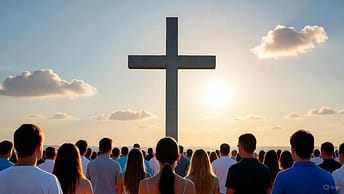
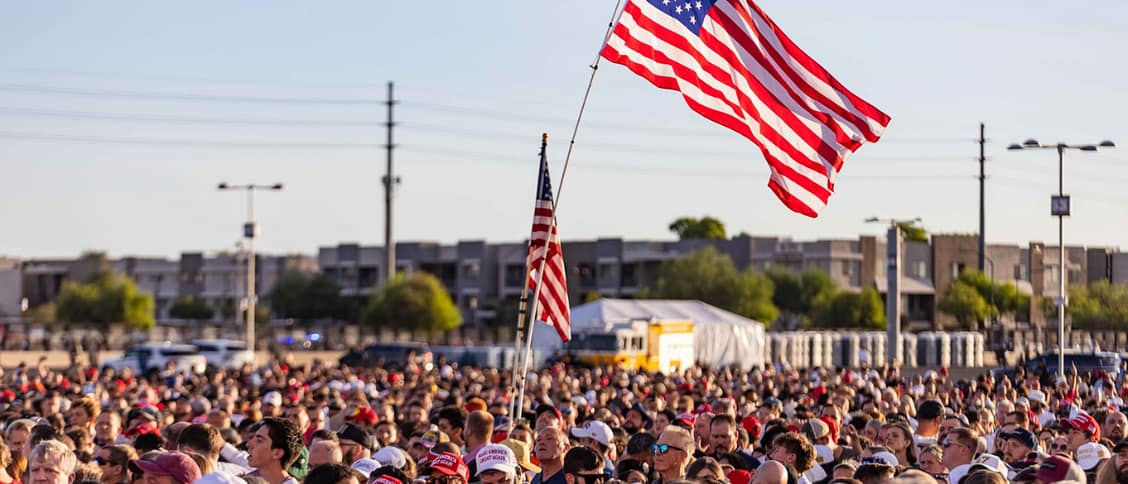
The revival began organically, without central coordination or institutional backing. In Phoenix, where Kirk had built his organization, a spontaneous vigil drew more than ten thousand people.
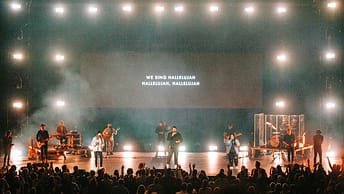
What was planned as a simple memorial service evolved into an hours-long worship gathering. Attendees described feeling an overwhelming sense of God’s presence.
Many wept openly, not just from grief, but from what they described as a profound spiritual encounter.
By the end of the evening, hundreds had recommitted their lives to Christ, and dozens reported coming to faith for the first time.
Similar scenes unfolded across the country.
In Florida, a group of college students who had attended Kirk’s campus events organized a prayer meeting that grew from twenty participants to over a thousand within a week.
In Texas, churches reported their largest attendance numbers in decades, with many new faces belonging to Generation Z individuals who cited Kirk’s death as a catalyst for examining their own spiritual lives.
The pattern repeated itself in countless communities: young people were turning to God in unprecedented numbers.
Religious leaders initially struggled to explain the phenomenon. Some suggested that Kirk’s death had created a vacuum that people were trying to fill with spiritual meaning.
Others believed it was evidence of a deeper hunger for truth and purpose that had been building beneath the surface of American culture.
Pastor Michael Rodriguez of Gateway Fellowship in California observed that many young people arriving at his church spoke about feeling disconnected and searching for something authentic.
Kirk’s death, he noted, had forced them to confront questions about mortality, meaning, and eternity they had been avoiding.
The revival’s power lay partly in its timing. Kirk died during a period of profound cultural anxiety.
Political polarization had reached new heights. Mental health crises were epidemic among young people. Trust in institutions had collapsed.
Many Americans felt adrift, lacking the anchors of community and shared values that previous generations had relied upon.
Into this void, Kirk’s message—that faith in God provided the ultimate foundation for life—suddenly seemed not just relevant but essential.
What made the movement particularly striking was its theological depth. This was not a superficial emotional response that would fade with time.
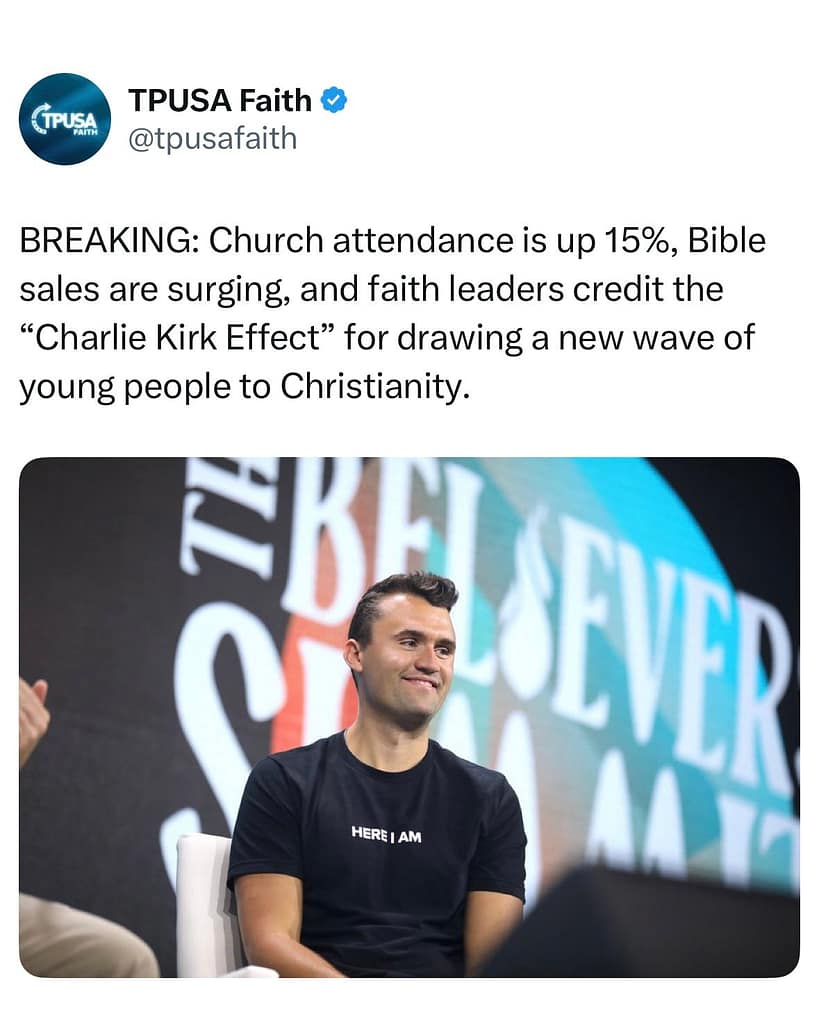
Churches reported that new believers were hungry for solid biblical teaching. Bible sales surged across the country.
God bless you @charliekirk11! #ChristianRevival https://t.co/Ma1Et2bzE0
— Christian Revival (@CK31Revival) October 15, 2025
Online searches for terms like “how to become a Christian” and “what happens after death” spiked dramatically.
Young people were asking hard questions about sin, redemption, and the nature of God.
They wanted substance, not sentimentality.
The revival also transcended traditional denominational boundaries.
Catholics, evangelicals, mainline Protestants, and Orthodox Christians all reported significant increases in engagement. What united these diverse traditions was a renewed emphasis on the historic Christian faith—the belief in Jesus Christ as Lord and Savior, the authority of Scripture, and the call to live transformed lives.
Kirk had always emphasized these core convictions in his public speaking, and his death seemed to strip away peripheral arguments and focus attention on what truly mattered.
International dimensions of the revival emerged quickly.
In countries where Kirk had spoken or where his content had reached through digital platforms, similar movements began taking shape. In Brazil, massive prayer gatherings filled stadiums.
In Nigeria, church leaders reported unprecedented interest from young professionals who had previously been indifferent to Christianity.
In Eastern Europe, where Kirk had championed religious freedom, believers found new courage to share their faith publicly. The ripple effects demonstrated how interconnected the modern world had become and how one person’s influence could extend far beyond their physical presence.
Critics initially dismissed the revival as manufactured or temporary.
They pointed to the role of social media in amplifying the phenomenon and suggested it was merely another viral trend that would soon fade.
But as weeks turned to months, the movement showed remarkable staying power. Churches that had experienced growth maintained their new members. Campus ministries reported sustained interest.
Charitable organizations affiliated with Christian churches saw increased volunteering and donations. The evidence suggested something genuine and lasting was occurring.
Psychologists and sociologists studying the revival offered various explanations for its intensity. Some emphasized the concept of “collective effervescence”—the energy and sense of unity people experience when gathered around shared rituals and beliefs.
Kirk’s death had created a moment of collective reflection that broke through the isolation many people felt in digital age. Others pointed to the human need for meaning in the face of mortality.
When confronted with death, especially the unexpected death of someone relatively young and vital, people naturally turn to ultimate questions about existence and purpose.
The revival also highlighted the unique role Kirk had played as a communicator.
He had possessed a rare ability to translate traditional Christian teaching into language that resonated with modern young people.
He met them where they were—on social media, on college campuses, in the public square—and spoke about faith in terms they could understand.
His death left many feeling they had lost not just a political commentator but a spiritual guide who had helped them make sense of their faith in a secular world.
Perhaps most significantly, the revival revealed the enduring power of Christianity to address the deepest human longings.
Despite decades of secularization and cultural change, the fundamental questions Kirk had spent his career addressing—Who are we? Why are we here? What happens when we die?—remained as urgent as ever.
His death became a catalyst that helped a generation recognize their need for answers that transcended politics, philosophy, or material success.
As the revival continued to unfold, religious leaders emphasized the importance of discipleship and spiritual formation.
They recognized that emotional enthusiasm, however genuine, needed to be grounded in biblical knowledge and Christian community.
Churches developed new programs to accommodate the influx of new believers, focusing on teaching basic doctrines and helping people integrate faith into daily life.
The goal was to ensure that the movement would produce lasting transformation rather than temporary excitement.
The Charlie Kirk revival, as it came to be known, stands as a testament to the mysterious ways spiritual awakening can occur.
It reminds us that God often works through unexpected means and that individual lives, faithfully lived, can have impact far beyond what any person can imagine.
Kirk’s death became not an ending but a beginning—the spark that ignited a flame of faith across a nation and around the world, drawing countless souls toward the eternal truths he had championed throughout his life.